Monday, 26 January 2015

Not back to school


The first week of our home-ed term in January started with a long walk along the path of a disused rail track. Trains used to run along this track from Lewes to Uckfield, but the line was closed down in 1969. Nowadays, the long, lonely track, lined by steep banks of trees, seems strangely post-apocalyptic and gave me the slightly uncomfortable sensation that I was in a scene from 'The Walking Dead'. For Charlie, however, the track was one long wonderland of mud and fallen branches, ready to turn into bridges and rivers.


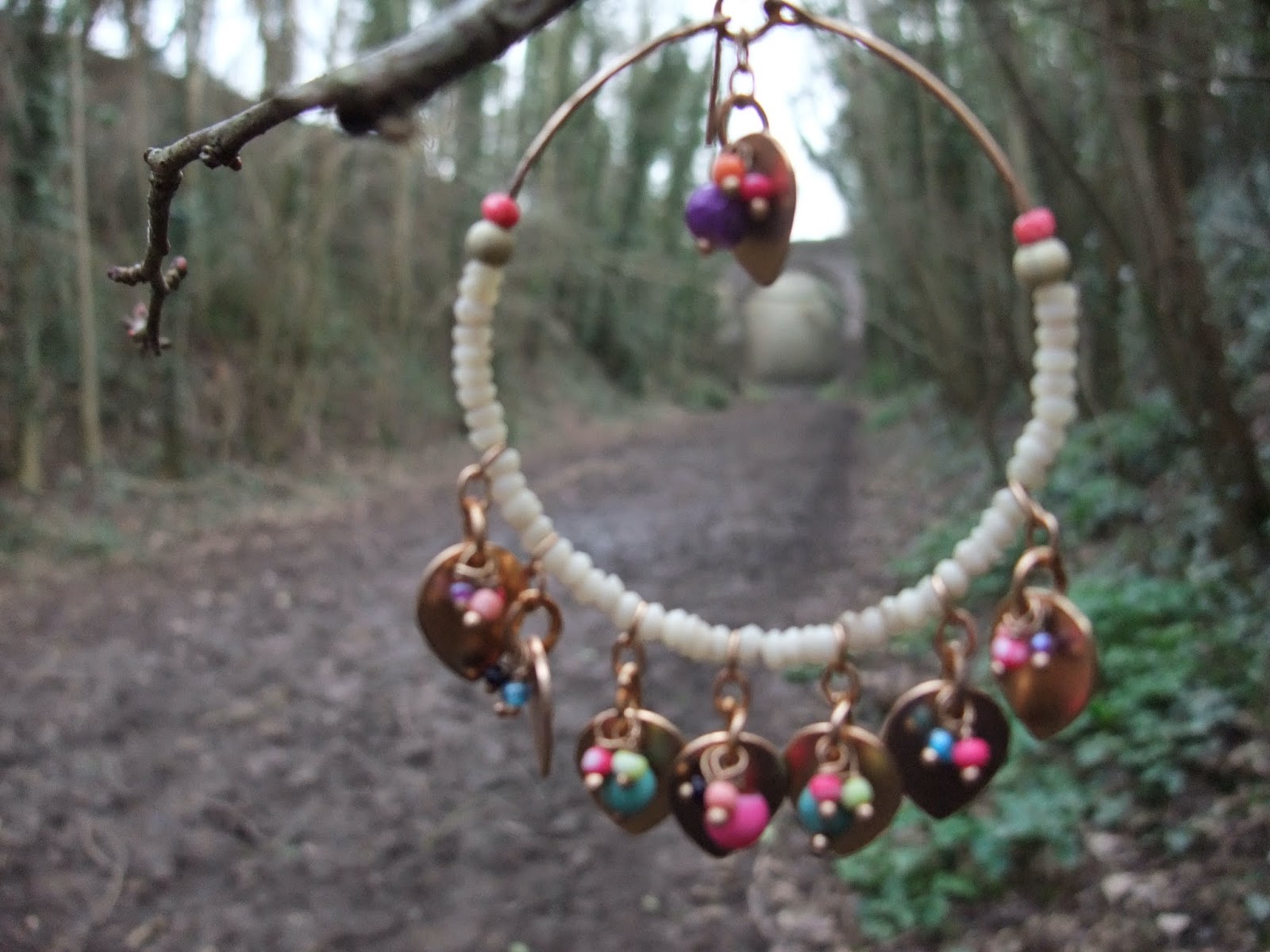
He even found some treasure...
 

At home, we returned to our studies on the Romans. Charlie copied out a recipe for roast dormouse, a popular delicacy in Roman times. 

We opted for chicken legs, rather than dormice, and used this recipe by Susannah Duffy. The recipe template comes from Twinkl, a fabulous website of primary resources. I took out a platinum subscription, which gives us access to everything on the site, and is worth every penny, in my opinion.


As Charlie loves cooking, I guessed that this recipe would be a fun way to make the subject of the Romans more interesting to him.


He enjoyed the preparation and served his 'dormice' for lunch for all of us, complete with a glass of 'wine' each (actually, elderflower). We were all quite taken aback by the flavour, which was quite different from anything we'd tasted before, and this led to an interesting conversation about how people from different times and cultures appreciate different tastes.


We have started studying the human body as part of our science studies. Charlie used more of our new Twinkl resources to label parts of the skeleton and identify bones on X-ray pictures.


He filled in the X-ray worksheet whilst waiting for me at the osteopath's, where I was being treated for neck and back pains. The osteopath brought out three of her models of the human skeleton for him to look at whilst he was there. The movable models - of a hand, a foot and a spine - were life sized and fitted with muscles and tendons. They were a wonderful and unexpected addition to his lesson.


We have also been studying volcanoes, as part of a Science/History topic (we are looking at the destruction of Pompeii in our Roman studies).


The above diagram - another one from Twinkl - was really helpful when I explained the process of volcanic eruptions to Charlie. We also watched this excellent video from Twig, which is available free on YouTube.

After reading the section on volcanoes in our Galore Park Junior Science book, we had a go at creating our own volcano.

A diagram from the Galore Park Junior Science book

Charlie set about creating a volcano with playdough, adding small paper churches and buildings for effect.


We then added bicarbonate of soda to the crater and tipped vinegar over it to make it 'erupt'. Charlie carefully added 'lava' to the trails left by the eruption, demonstrating how volcanic eruptions change the shape of the mountain.


Our experiment ended with a super-explosion which thoroughly decimated the paper village, much to Charlie's obvious delight.


Afterwards, Charlie turned into a geologist by excavating some of the 'rock' with a plastic straw, which revealed how many different layers of rock there were in the volcano.


We continued our Roman studies by reading 'Escape from Pompeii' by Christina Balit. This is a strikingly illustrated children's book about the eruption of Mount Vesuvius in AD79. The story was perhaps too young for Charlie, but he appreciated the illustrations, particularly the one of the volcano exploding.


As well as keeping up with Maths, handwriting and tricky spellings, Charlie spent a lot of this week baking cupcakes from a new book called 'The Hummingbird Bakery Cookbook'. He shared his creations with us and with our neighbours, who grew used to a daily delivery of delicious cupcakes.


Friday, 9 January 2015

And a happy new year!


The Christmas decorations have been packed away for another year and our home ed box has been dragged back out into the light again. As we don't have the luxury of a dedicated storage area, each week's work is stuffed into the box for easy retrieval, complete with pens, pencils, coloured felt tips, rulers and rubbers.


As always, I have succumbed to the temptation to explore new resources. The Civitas 'What Your Child Needs to Know'  books were recommended on a home educators' forum and look promising. This week, Charlie and I have been dipping into What Your Year 4 Child Needs to Know to learn about Roman myths and history. 


Another investment I have made for the New Year is to subscribe to Twinkl, a website which provides access to hundreds of primary teaching resources. I have already bookmarked dozens of documents for use at a later date. 

We started our first week with a timetable, as Charlie prefers to know what we're going to be doing each day. The timetable provides a useful reminder for both of us, but it is not set in stone and Charlie can spend longer on things that interest him or speed through those that don't. He is not keen on the routine, repetitive learning that I insist he does most mornings, but I remain firm about these. Yes, it's boring to practise handwriting and Times Tables, but these are both useful skills that, once learnt, will never be forgotten.


One subject that I haven't concentrated much on before is spelling, as this comes easily to Charlie and he always used to get good marks in his school spelling tests without doing any revision first. However, Charlie asked me if we could do spelling this term and I realised I had perhaps become too complacent about this. Luckily, I already had Usborne's Tricky Words to Spell card pack, featuring wipe-clean cards, so Charlie has been using that to practise unusual or difficult words. We will also be going through the word lists on the National Curriculum.


This week, we began learning about the human skeleton, which Charlie had asked to study. The Twinkl resources came in useful here.

Labelling the human skeleton

Charlie also had the opportunity to open his latest pack from Little Passports.

The Little Passport suitcase provides storage for all their materials
 
This month's package focused on Japan. Charlie was easily able to find it on his world map and stick his pin sticker on Tokyo.


He enjoyed all the activities provided, but especially the origami pack. My one criticism is that the instructions in the pack were not clear enough, but this was easily solved by searching on YouTube for visual instructions, which were much easier to follow. 


Charlie was very pleased when he managed to create a boat that floated and a frog that jumped.


Whilst exploring an online map of Japan, complete with photographs, Charlie discovered the volcanic Mount Fuji. By chance, I had borrowed a book from the library called The World's Most Amazing Volcanoes, so we were then able to read more about it.


This term, we will be looking at volcanoes, both from a geographical viewpoint and from an historical one (as we will be learning about Pompeii).

We are continuing with our topic on the Romans and spent this week learning about Roman myths and the Roman way of life. Charlie was intrigued to discover that the planet names he is already so familiar with are actually the names of Greek and Roman gods.


Charlie is also taking part in a home educator's free trial subscription to First News. First News is a weekly children's newspaper. Our trial subscription provides us with access to the weekly teachers' resources provided for schools: in-depth reading comprehension; discussion questions; article analysis; puzzles; and crosswords. Charlie has already read last week's edition of the paper, but we have only just received our link to the teacher resources, so we won't be starting to use them till next week.

Here are the main resources we will be using this term (subject to review - flexibility being one of the advantages of home ed):

Maths ConquerMaths; games (eg. City of Zombies, Cup Cake Dice, Times Table Snap ), practice worksheets from Twinkl .

English Junior English (Galore Park)

Handwriting Handwriting Practice 2 (Schofield & Sims)

Science Junior Science (Galore Park)

Whole curriculum What Your Year 4 Child Needs to Know

Charlie's daily cycling will be replaced by regular swimming. We will continue to go on lots of long walks in local parks and across the South Downs. We also have lots of trips planned, including a trip to the National Theatre in February to see Treasure Island and a trip to the SeaLife Centre in Brighton.

He will also continue to see his friends regularly. 


Wednesday, 24 December 2014

Merry Christmas


No formal work this past week or so: just lots of Christmas preparations. This is the third year we have used the Usborne 'Christmas Decorations to Cut, Fold & Stick' to decorate our house. It's a fabulous book featuring easy-to-make and attractive decorations. I save ones from the year before, then add new ones as we make them each Christmas.


Charlie enjoyed decorating our house with his homemade creations.


Last weekend, we caught the train to Kingston to see a much-loved friend of ours performing in 'The Lion, the Witch and the Wardrobe' at the Rose Theatre.


Charlie has recently read the book and is currently reading 'Prince Caspian', so he was pretty clued up on Narnia and the Pevensies. It was interesting for him to be able to compare the book with the performance. The play was very well done. The moment when the giant wardrobe opened to reveal Narnia and snow fell from the ceiling was magical.

On the way home, we discussed how the theatrical production had handled the plot. Charlie wasn't happy with the way that people had been turned to stone (by freezing position and having netting flung over them), so we talked about that and how else it could have been done. He was also disappointed that Aslan wasn't a real lion or a model of a lion. It came down to the difference between our unlimited imagination when we read books and the limits of theatre, something which Charlie hasn't encountered much before. 

We were all very impressed by our friend, who played Susan. She had been so convincing in the part that I had quite forgotten that I was watching someone I knew.

On Christmas Eve, we had our first Christmas lunch. Charlie was delighted to unwrap his present from Grandma and discover an electronics kit.


He spent the rest of the day building different electrical models: a burglar alarm; a radio; and a fan.


I'll be taking a break from this blog for a while as we enjoy the Christmas festivities. Merry Chistmas!

Monday, 15 December 2014


Although the weather has turned cold, Charlie still wants to go out on walks across the Downs with me or his Dad. As the nights draw in, we have watched the sun go down during our late afternoon walks.


At home, Charlie has been studying science by completing his first Crest Star challenge. I signed him up for it because he loves science and enjoys being creative and inventive. Crest Star is described as 'a UK-wide award scheme enabling children, usually 5 - 11, to solve science, technology, engineering, and maths (STEM) problems through practical investigations'. You can sign up through the British Science Association website. It's not free, but there are free investigations available on the website if you don't want to pay for the full scheme.

Charlie's first challenge was to build a 'band roller'. This experiment demonstrated the physics of forces and motion, as well as exploring the need for alternative technologies in the face of climate change.


Before starting on the challenge, we looked at a wind-up lantern to see how it worked. We also watched a video about Trevor Bayliss and how he invented the clockwork radio. 

After laying the required equipment out on the table, Charlie set about creating his own version of an energy-saving 'clockwork' gadget.


Work in progress
The completed band roller

The model worked first time. After playing with it for a bit and seeing how fast it could go and what would slow it down or speed it up, Charlie set about making some modifications.


The material from the British Science Association also features extra challenges to encourage thinking and creativity.


In History, we have been studying Boudicca and her revolt against the Romans. We explored how people form different opinions on historical events, depending on their viewpoint. In particular, we looked at the different ways Boudicca's rebellion was regarded by the Celts and the Romans.


 Charlie drew a comic strip describing the events of Boudicca's rebellion.


In between lessons, we have found time to play a game we have just bought called  City of Zombies, which has had excellent reviews and won numerous awards, including Best Family Game Gold Award and Best Numeracy Game Gold Award. Charlie has grown up with talk of zombies, thanks to having a much older brother, so I thought this might appeal to him. One of the advantages of the game is that you have a choice of either cards featuring cartoon-style zombies, for younger or more sensitive children, or cards featuring more hard-core, gruesome zombies for older children. Charlie chose the former.


The game is easy to set up and play, with a simple premise: you are a hero who has rescued a number of survivors (represented with survivor cards and your chosen hero card). You are sheltering behind the barricades, waiting for the rescue plane to arrive and carry you to safety. In the distance, six zombies (each zombie card featuring a number) are approaching you. You roll three dice and try to work out the best mathematical combination to zap the numbers on the zombie cards. You must use all three dice, but you can use any kind of maths: adding, subtracting, multiplying and so on. You can even 'power up' (square) the numbers on your dice. If you manage to match the number on a zombie card, or two, they are removed to the zombie graveyard. As you and your partner or team finish each round, the zombies move closer, but so does the rescue plane. Can you kill all the zombies before the plane arrives?

This game has been a good, fun way for Charlie to practise his mental maths.

Cartoon-style zombie

From zombies to Christmas preparations: Charlie enjoyed making a gingerbread house at the end of last week.


He wanted to eat it all straight away, but I persuaded him to put it up for decoration. After all, it really does look too good to eat.